DRIVING RANGE

Golf swing analyzerSwing.
Score.
Improve.

Real-time golf swing analysis on your Garmin, Apple Watch, or Wear OS — with personalized coaching in the Swing Pro app on your phone.

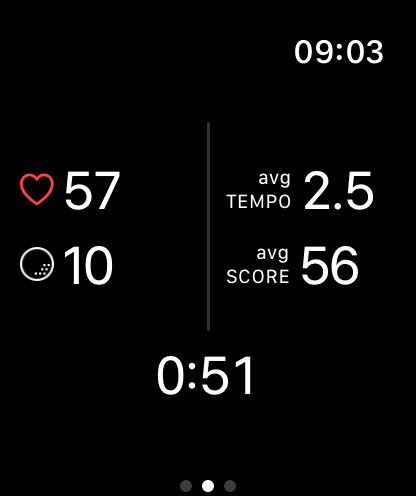
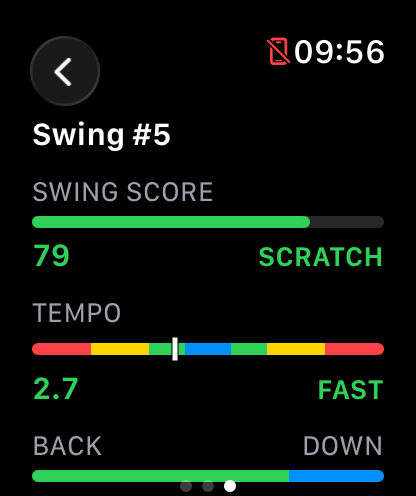
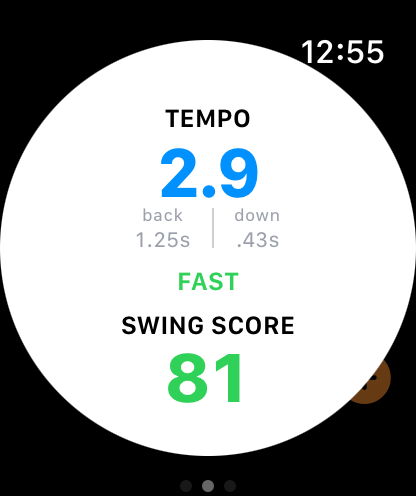
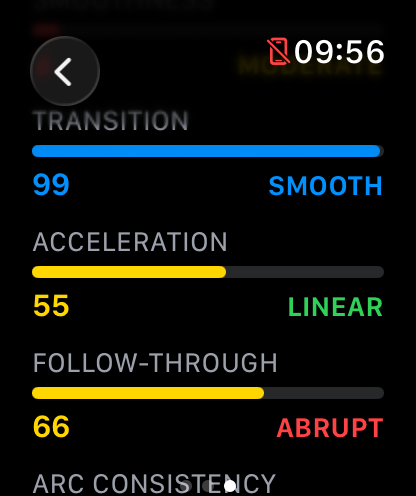
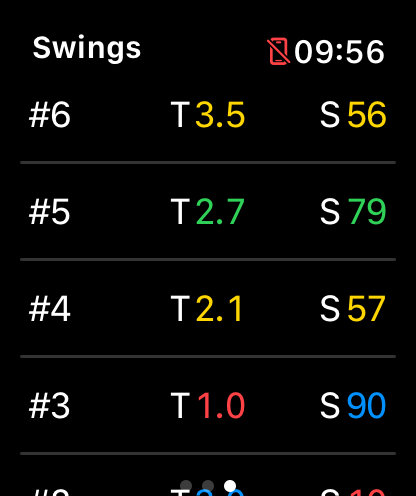
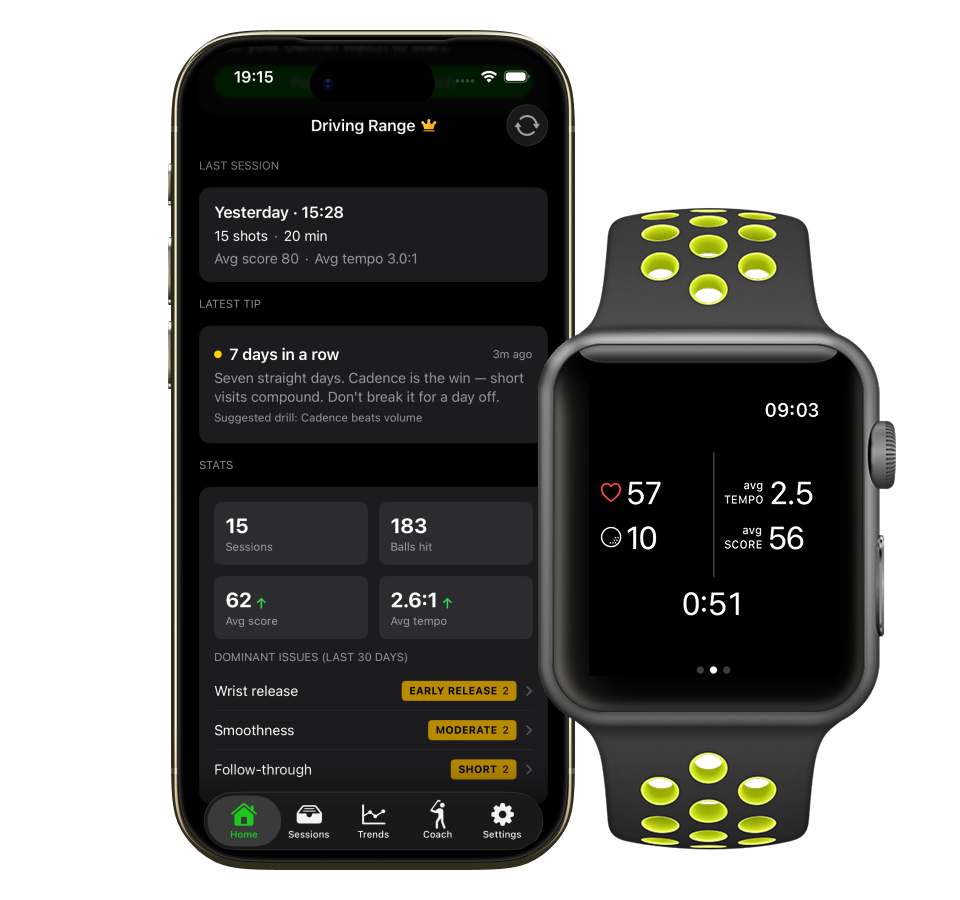
Driving Range app on iPhone showing session stats and coaching, next to an Apple Watch showing live swing metrics
  • Garmin Connect Editors’ Choice
  • Best Sports App Garmin 2025
  • Top 10 Garmin App
10Swing metrics
36Languages
100+Devices supported

Why golfers love it

Zero setup

No phone, no club sensors, no video. Just the watch on your wrist and a bucket of balls.

Instant swing score

Every shot rated 0–100 across ten metrics, so you know immediately what clicked and what didn’t.

Real coaching tips

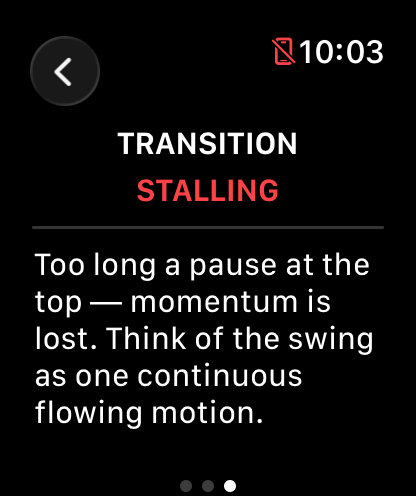
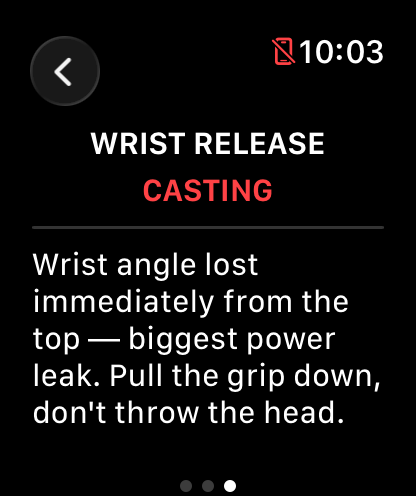
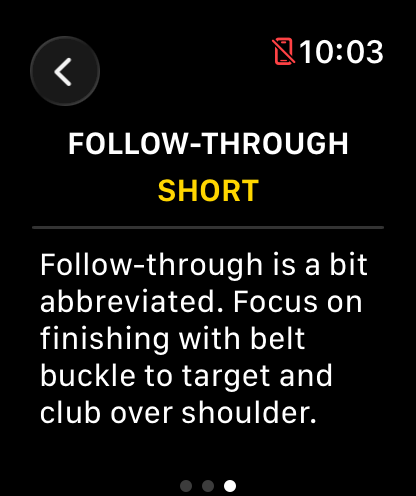
Not just numbers — tap any metric for plain-language advice tuned to this swing, this miss, right now.

Adapts to you

Detection learns your motion after a few swings and auto-calibrates — smooth senior or explosive junior.

Fatigue & pressure alerts

It flags when your arc collapses, your tempo drifts, or your backswing starts rushing under nerves.

Session summary

Averaged metrics and trends over time — leave the range knowing exactly what improved.

One score. Ten metrics.

Swing Score Your 0–100 overall grade. Swing Score Swing Score rolls your tempo, smoothness, transition and the rest into a single 0–100 number, so you can see progress at a glance. Each component metric is scored on its own scale, then the components are merged into the overall grade. One number makes it easy to compare sessions and track improvement over time. Read the full guide → Tempo Backswing-to-downswing ratio. Tempo Tempo is the ratio of how long your backswing takes to how long your downswing takes, shown as a number like 3.0:1. The classic tour target is roughly three-to-one — a backswing about three times longer than the downswing. It is a ratio, not a speed: two players with very different clubhead speeds can share the same tempo. A repeatable tempo ratio is one of the strongest predictors of solid, consistent contact, because it keeps your sequencing in sync whether you swing easy or hard. When the ratio drifts swing to swing, timing and face angle usually drift with it. Read the full guide → Smoothness How fluid the motion is. Smoothness Smoothness tracks how steadily you swing the club. Lots of spikes in the sensor trace mean the motion is choppy; a clean trace means speed builds and releases in one fluid curve. Think of it as "how many sudden jolts appear in your speed trace," not "how fast you swing" — two players can share the same peak speed with very different smoothness. A smooth swing transfers energy efficiently and repeats under pressure, while abrupt moves leak clubhead speed and throw the face off line. Read the full guide → Transition Top-of-swing changeover. Transition Transition is the changeover at the top of your swing — how the club and body change direction as the backswing ends and the downswing begins. A clean transition blends the completion of the backswing with the start of the downswing without a violent snatch, a long dead stop, or a reroute that looks like two swings stitched together. The transition sets the tempo and sequence for your entire downswing, and rushing it from the top is the most common source of slices and pulls. Read it alongside tempo and smoothness — they often tell the same story from different angles. Read the full guide → Acceleration Speed build into impact. Acceleration The acceleration profile describes the shape of the speed curve during the downswing — how clubhead speed ramps from the transition into impact. In an efficient pattern, speed builds progressively: the early downswing sets the sequence, the middle stores and transfers, and the late downswing delivers peak speed near the ball. Delivering maximum speed at impact — instead of peaking early and decelerating into the ball — is what produces both distance and consistent strikes. The profile shows whether you are patient then explosive, muscling evenly, late to fire, or spiking very late. It complements tempo, smoothness, and wrist release. Read the full guide → Follow-through Finish completeness. Follow-through Follow-through is calculated from how the club decelerates after impact. A longer deceleration profile means the club keeps moving through and past the ball in a committed way; a very short one means the body and club check or stall around impact. This is not "how high your hands finish" on camera — it is whether rotational energy is cut off abruptly or allowed to dissipate along a natural arc. A full finish is a sign that you accelerated through impact, while a short follow-through usually means you steered the club or decelerated into the ball. Read the full guide → Arc consistency Repeatability swing to swing. Arc consistency Arc consistency shows how stable your swing radius — the effective arc — stays as you fire into the ball. When the radius holds, the signal is steady. When the arms shorten or widen abruptly — chicken wing, early release, standing up, or fatigue collapse — the signature turns variable or collapsing. Repeatability is the foundation of good ball-striking — a swing that keeps its structure delivers the club the same way every time and tightens your dispersion. This metric also doubles as a fatigue alarm: arcs that shrink late in a bucket are telling you something before your scores do. Read the full guide → Backswing tempo Backswing pacing. Backswing tempo Backswing tempo compares this swing's backswing peak speed against your own session baseline. Unlike overall tempo — the backswing-to-downswing ratio — this metric answers one question: "Was this backswing unusually quick for me, today?" The watch needs your first few swings to learn what "normal" means for you that day, so make them smooth and honest rather than chasing readings. The backswing sets the rhythm for the whole swing. Quieting it is one of the fastest ways to restore sequence, transition quality, and face control when nerves or adrenaline show up. Read the full guide → Wrist release Release timing through the ball. Wrist release Wrist release describes when the wrists unhinge during the downswing relative to peak rotational activity. Good lag stores the angle until late in the downswing; casting throws it away early; early release is the milder version; scooping is the wrists flipping at the ball itself. Releasing at the right moment delivers maximum speed and a square face at the ball, while releasing early throws away lag and speed. Wrist timing needs fast, precise sensor data, so on some watches the metric can read N/A — treat it as supporting evidence alongside ball flight, video, and the acceleration profile. Read the full guide → Metronome Built-in tempo trainer. Metronome The metronome is a built-in tempo trainer rather than a scored metric — it plays a steady beat through the watch's speaker, its vibration motor, or both, marking your target backswing and downswing rhythm. Swinging to an external beat is one of the fastest ways to groove a repeatable tempo, because a steady rhythm overrides the instinct to rush the transition under pressure. Every preset keeps the same 3:1 backswing-to-downswing ratio — the tour benchmark — and only the overall speed changes. Read the full guide →

What players say

“Finally an app that tells me what I’m actually doing wrong, not just showing numbers. The coaching tips alone are worth it.”
Ben D., 18 HCP
“My favorite driving range companion. Love the stats!”
Chris, 12 HCP
“Awesome app! Found some interesting things about my swing.”
Amy F., 24 HCP
“I know my swing is not perfect but I can see how I improve over time!”
Chen Z., 22 HCP

Ready to see your swing?

Your Personal Golf Swing Coach, Always on Your Wrist

Most golfers hit hundreds of balls at the range with no idea whether they’re getting better or grooving bad habits. Driving Range changes that. It turns the watch on your wrist — Garmin, Apple Watch, or Wear OS — into a real-time swing analyzer that detects every swing automatically, scores it across ten proven metrics, and tells you exactly what to work on — right there on the range, between shots, when the feedback actually matters.

No phone in your pocket. No sensors on the club. No video to review later. Just strap on the watch you already own, tap Start, and swing. Within seconds you see your tempo ratio, smoothness, transition quality, acceleration profile, and an overall swing score from 0 to 100. Tap any metric for a plain-language coaching tip tailored to what the sensor data actually found — not a generic article, but advice for this swing, this problem, right now.

The app learns your motion. After a few swings it adapts detection to your personal style, so a smooth senior player and an athletic junior both get accurate reads without touching a single setting. It tracks fatigue as your session goes on, flags when your arc collapses or your backswing starts rushing under pressure, and gives you a session summary so you can see the trend — not just one lucky rep.

Golfers who use Driving Range tell us the same thing: they practice with purpose instead of autopilot, they spot problems before a coach would, and they leave the range knowing exactly what improved. Whether you’re breaking 100 for the first time or grinding to scratch, this is the feedback loop that makes every bucket count.